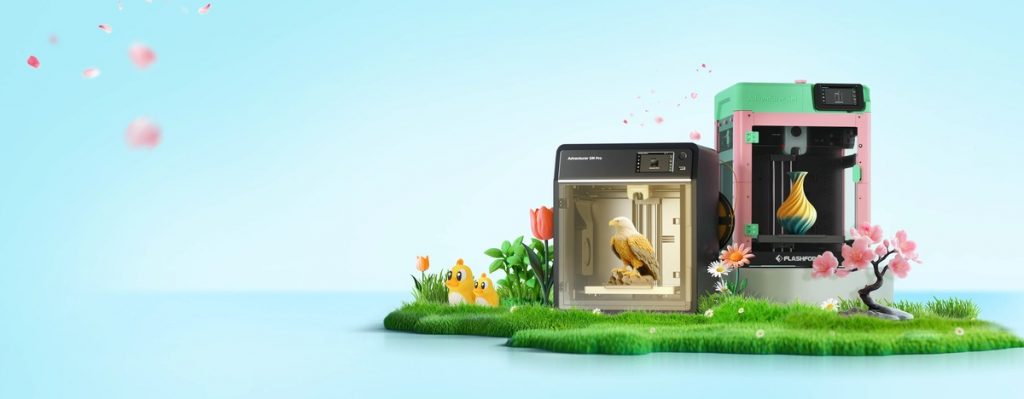

Alright, let’s talk 3D printing. If you’re anything like me, you’ve probably spent countless hours scrolling through forums, watching YouTube reviews, and perhaps even wrestling with a finicky machine or two in your quest for that perfect print. I’ve been down that road, from the early days of figuring out what an extruder even *was*, to now, where my workshop hums with the satisfying sound of layers being laid down. And if there’s one brand that has consistently delivered, impressed, and frankly, made my life a whole lot easier in this exciting world, it’s Flashforge.
Before I dive deep, let me just say, if you’re on the fence about getting into 3D printing, or looking to upgrade your current setup, you absolutely owe it to yourself to check out their offerings. You can Visit Official flashforge Website Now and see for yourself. Trust me, it’s worth the click.
My Own Journey into the Flashforge Ecosystem
My first real foray into serious 3D printing began a few years back, after a frustrating experience with a cheaper, less reliable machine that felt more like a science project than a tool. I was craving something that just *worked* – something I could set up, load filament into, and expect a decent print without an engineering degree. That’s when I stumbled upon the Flashforge Creator Pro. I remember the unboxing experience vividly; the machine felt solid, well-built, and far less intimidating than my previous nightmare. From the moment I powered it on, the difference was palpable. The enclosed chamber, the sturdy frame, the dual extruders – it all spoke of thoughtful engineering.
I started printing all sorts of things – replacement parts for appliances, custom organizers for my desk, little figurines for my kids. The Creator Pro handled PLA, ABS, and even some more exotic filaments with impressive consistency. The ability to print with two different colors or materials simultaneously, or use soluble supports, was a revelation. It wasn’t just about printing; it was about prototyping, creating functional parts, and seeing ideas come to life with a level of reliability I hadn’t experienced before. This machine became the backbone of my workshop, running for hundreds of hours, barely skipping a beat. It genuinely made me fall back in love with 3D printing after a period of disillusionment.
What Makes Flashforge Stand Out in a Crowded Market?
In a market saturated with countless brands, Flashforge has managed to carve out a significant niche, and for good reason. They consistently hit that sweet spot between performance, reliability, and user-friendliness, all without breaking the bank. For me, several key factors set them apart:
* **Build Quality and Durability:** This is huge. A 3D printer isn’t a disposable gadget. Flashforge machines feel robust. They’re built with high-quality components, leading to less wobbling, better print accuracy, and a much longer lifespan. My Creator Pro, after years of service, still produces excellent prints.
* **Ease of Use:** Whether you’re a complete novice or an experienced maker, Flashforge printers are surprisingly intuitive. Many models come fully assembled or with minimal setup required. Features like assisted bed leveling, enclosed build chambers, and user-friendly touchscreens make the printing process significantly smoother.
* **Reliability and Consistency:** This is where the rubber meets the road. Nobody wants to babysit a printer for hours only for it to fail halfway through a critical print. Flashforge printers are known for their consistent performance. Once you dial in your settings, you can often walk away and trust that it will finish the job.
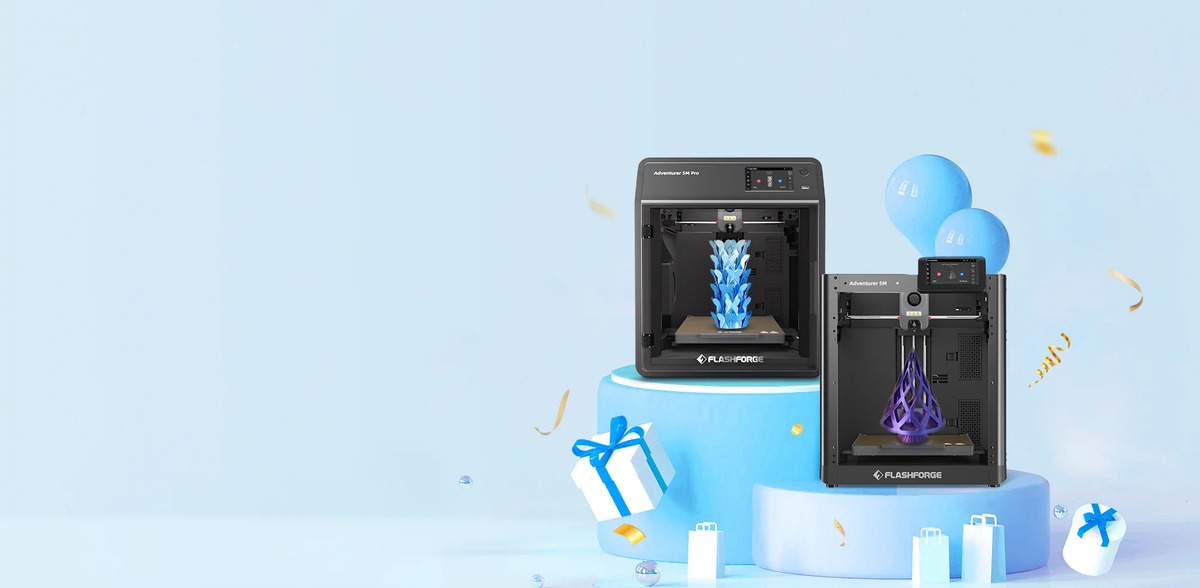
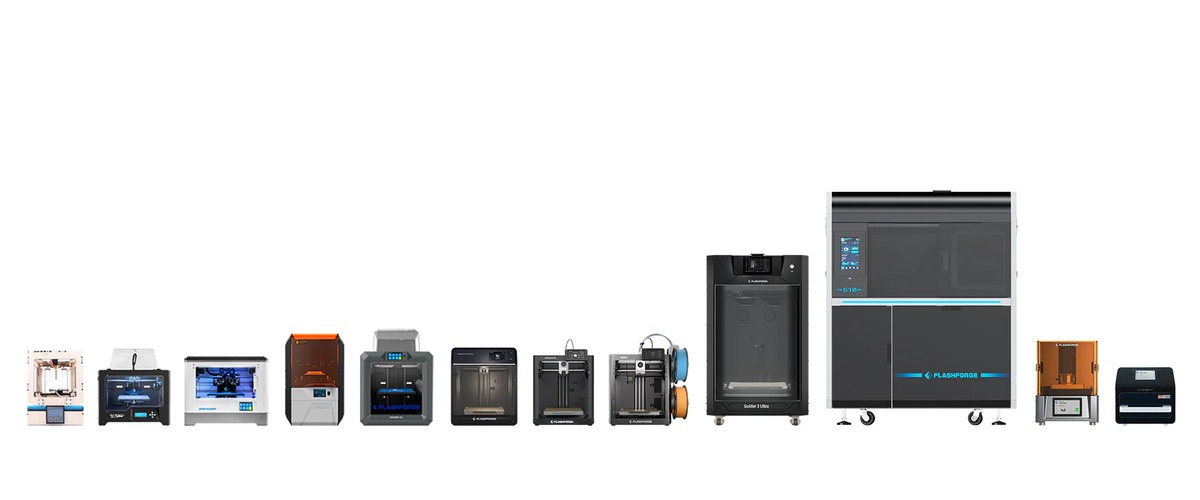
* **Innovation and Range:** Flashforge isn’t resting on its laurels. They’re constantly innovating, from their popular Adventurer series (perfect for beginners and educational settings) to their powerful Guider series (ideal for professional applications), and their advanced Creator line. They offer a solution for nearly every need and budget.
* **Dedicated Software – FlashPrint:** Their proprietary slicing software, FlashPrint, is a joy to use. It’s intuitive, powerful, and specifically optimized for Flashforge printers. It handles everything from simple model loading and slicing to more advanced settings like support generation and multiple extruder configurations. It makes getting from a CAD file to a printable G-code remarkably straightforward.
Diving into the Models: A Printer for Every Maker
Let’s talk about some of their popular lines, because they really do cater to different segments of the market.
**The Adventurer Series: Your Friendly Entry Point**
If you’re just dipping your toes into 3D printing, or looking for a super user-friendly machine for a classroom or your kids, the Adventurer series is fantastic. I eventually got an Adventurer 3 Lite for my home office when I needed something compact and quiet, and I was genuinely impressed. It’s practically ready to print right out of the box. The auto-leveling is a lifesaver, the enclosed build chamber is great for safer printing and temperature stability, and the removable build plate makes print removal a breeze.
I remember my nephew, who’s about ten, was able to load filament and start a print on the Adventurer 3 with minimal supervision after just a quick tutorial. That’s how easy it is. It’s a true plug-and-play experience, designed to remove as much friction as possible from the learning curve. You can print intricate models with surprising detail, considering its price point. It’s a wonderful starting point for anyone who wants to avoid the frustration often associated with entry-level machines.
“I was totally new to 3D printing, and my Flashforge Adventurer 3 Lite made it so easy to jump in. The prints just came out great right out of the box.” – Emily R.
This kind of feedback resonates perfectly with my experience. It’s a testament to Flashforge’s commitment to making 3D printing accessible.
**The Creator and Guider Series: Powerhouses for Pros and Enthusiasts**
For those who need more oomph, larger build volumes, or specialized capabilities, the Creator and Guider series step up to the plate. As I mentioned, my Creator Pro was a workhorse, and the newer iterations like the Creator Pro 2 continue that legacy with enhanced features like independent dual extruders (IDEX), allowing for simultaneous printing of two models or printing with two different materials without issues like oozing.
The Guider series, like the Guider IIs, is where Flashforge really flexes its industrial muscles. These machines offer massive build volumes, advanced features like filament run-out detection, resume printing function, and robust network connectivity, making them ideal for small businesses, engineering firms, or serious hobbyists who need unwavering reliability for large, complex projects. When you’re printing something that takes days, knowing your machine is built to handle it is incredibly reassuring.
“For my small business, consistency is everything. My Flashforge Guider IIs has been a total workhorse for over two years, running almost daily without a hitch.” – Mark T.
Mark’s experience perfectly illustrates the reliability I’ve come to expect from the brand. These aren’t hobby-grade toys; they’re serious tools for serious creation.
The FlashPrint Experience: Software That Doesn’t Get in Your Way
A great 3D printer is only as good as its software, and FlashPrint is genuinely one of the highlights of the Flashforge ecosystem. I’ve used various slicing software over the years – some are overly complex, others are buggy, and many have a steep learning curve. FlashPrint, however, strikes a fantastic balance.
It’s intuitive enough for a beginner to quickly load a model, hit “auto slice,” and get a good result. But it also offers a wealth of advanced settings for experienced users to fine-tune every aspect of their print: support structures (linear, tree-like, or customized), infill patterns, temperatures, speeds, and so much more. The ability to switch between “basic” and “expert” modes is a smart design choice.
One of my favorite features is the automatic support generation. FlashPrint does a remarkably good job of identifying overhangs and placing supports efficiently, often requiring minimal post-processing. Plus, the built-in model library and the ability to directly connect to your Flashforge printer over Wi-Fi for remote monitoring and control are incredibly convenient. It’s a testament to how integrated and well-thought-out the entire Flashforge experience is.
“The dual extrusion on my Creator Pro 2 has opened up so many possibilities. Being able to print soluble supports or multi-color models without fuss is a game-changer.” – Sarah L.
Sarah’s point about dual extrusion and FlashPrint’s role in managing it highlights the synergy between their hardware and software. It’s not just about having the features, but about making them accessible and easy to use.
Print Quality and Reliability: Where Flashforge Shines
Ultimately, what matters most is the final product. And this is where Flashforge consistently delivers. From the smallest, most intricate details to large, functional prototypes, I’ve found their printers capable of producing remarkably high-quality prints. Layer lines are often imperceptible, dimensional accuracy is impressive, and overall surface finish is excellent, especially when dialed in.
I’ve used my Flashforge printers for everything from printing highly detailed miniatures for tabletop gaming to creating custom jigs and fixtures for woodworking projects. The consistency is what truly stands out. When you load a new filament or switch between projects, you don’t have to spend hours re-calibrating or troubleshooting. The enclosed chambers on many models contribute significantly to this, especially when printing with temperature-sensitive materials like ABS, by maintaining a stable environment. This consistency translates directly into saved time, reduced material waste, and a much more enjoyable printing experience.
Moreover, their customer support and community are pretty solid. When I had a minor question about a specific filament profile, their team was responsive and helpful. It’s good to know that if you ever run into a snag, there’s support available.
“I had a question about a setting, and their support team was actually really helpful and quick to respond. That makes a big difference when you’re troubleshooting.” – David P.
This level of service adds significant value, especially for those who might feel intimidated by the technical aspects of 3D printing.
Value for Money and Long-Term Investment
When you consider the robust build quality, the advanced features, the user-friendly software, and the consistent print quality, Flashforge printers offer incredible value for their price point. They aren’t always the cheapest option on the market, but they represent a wise investment. You’re paying for reliability, ease of use, and a machine that will last and consistently perform, rather than spending countless hours troubleshooting or replacing flimsy parts.
For a hobbyist, this means more time creating and less time fixing. For a small business, it means consistent output and fewer production delays. Flashforge has managed to democratize advanced 3D printing technology, making it accessible to a wider audience without compromising on quality.
Some Considerations (No Printer is Perfect, Right?)
While I’m clearly a big fan, it’s only fair to mention a couple of minor points. Like any tool, there’s always room for growth. For some of the older models, the noise level can be a consideration in a very quiet environment, though newer models have definitely improved in this area. Also, while FlashPrint is excellent, some advanced users might occasionally crave the absolute granular control offered by some open-source slicers for highly specialized applications, though FlashPrint covers 99% of my needs. These are minor quibbles, though, in the grand scheme of things.
Final Thoughts: Why I Keep Coming Back to Flashforge
My journey with 3D printing has been filled with experiments, successes, and a few learning curves, but one constant has been the reliability and satisfaction I get from my Flashforge printers. They’ve empowered me to bring countless ideas to life, from practical household fixes to creative artistic endeavors. They’ve proven to be consistent, user-friendly, and built to last.
If you’re looking to get into 3D printing, or if you’re ready to upgrade to a more dependable and capable machine, I wholeheartedly recommend giving Flashforge a serious look. They’ve continually impressed me with their commitment to quality and innovation, making the intricate world of 3D printing accessible and enjoyable for everyone.
Don’t just take my word for it; explore their range and see which model fits your creative ambitions. You can find all the details and their fantastic selection of 3D printers and accessories by visiting their site here: Visit Official flashforge Website Now. You won’t regret taking the leap into the exciting world of Flashforge 3D printing! And seriously, for your next step in 3D printing, I urge you to Visit Official flashforge Website Now. It’s an investment in your creativity that truly pays off. One last time, for real quality, check out Visit Official flashforge Website Now! Happy printing!