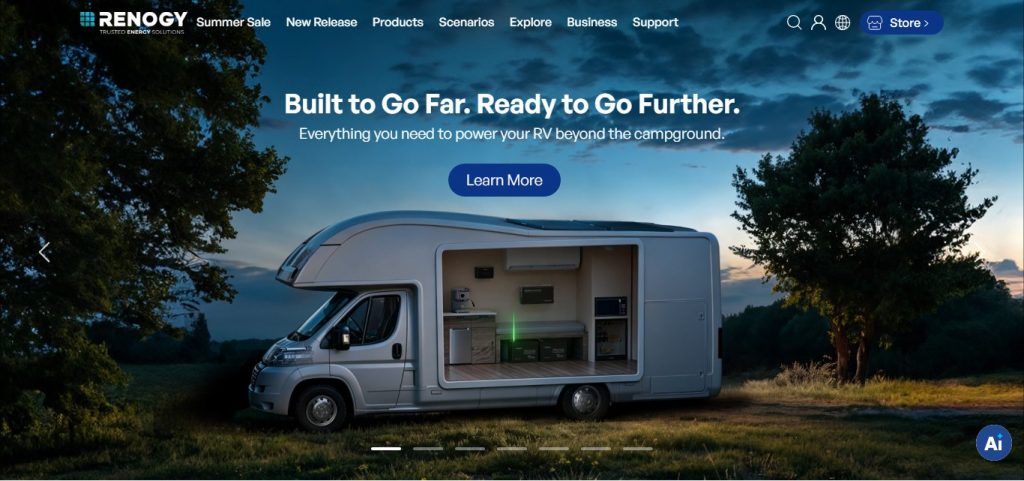

Alright, let’s talk about power. Not the kind you get from your electric company, but the kind you generate yourself, the kind that gives you a sense of genuine independence. For me, that journey started a few years ago when I first dipped my toes into the world of solar energy, and it quickly led me to Renogy.
I remember it vividly. I was planning a cross-country RV trip, something I’d dreamed about for ages. The idea of being tied to campgrounds just for electricity felt… wrong. I wanted to wake up in remote areas, brew my coffee, charge my gadgets, and not worry about draining a noisy generator or running out of juice. That’s when the deep dive into solar began. I spent weeks, probably months, researching. Youtube videos, forum posts, product reviews – you name it, I consumed it. Every conversation with fellow travelers seemed to circle back to one name: Renogy. People swore by their reliability and accessibility, especially for someone like me who wasn’t an electrical engineer but was keen to learn.
Initially, I was a bit overwhelmed by all the jargon – MPPT, PWM, watt-hours, amp-hours, pure sine wave vs. modified sine wave. It felt like learning a new language. But the more I looked into **Renogy**, the more I saw a brand that seemed designed to demystify solar. Their kits were often lauded for being relatively straightforward, and their individual components were compatible, allowing for expansion later. That sounded perfect for my first foray. I wasn’t looking for a short-term fix; I was looking for a long-term solution to sustainable power on the go.
My goal here isn’t to just list features. It’s to share my actual, lived experience with Renogy’s products, how they’ve powered my adventures, and why I continue to rely on them. If you’re like I was – standing at the precipice of solar power, a little intimidated but incredibly excited – then hopefully, my story will shed some light on whether Renogy is the right partner for your energy independence.
If you’re curious about what Renogy has to offer, you can explore their range here: Visit Official Website Now
## My Renogy Journey: The First Dive
My first actual purchase was one of their starter kits, a 100-watt monocrystalline solar panel coupled with a 30A PWM charge controller. I chose PWM because it was simpler and more budget-friendly for my initial setup, even though I knew MPPT was more efficient. I just wanted to get my feet wet.
When the boxes arrived, I was impressed. Everything was packaged securely, and the panel itself felt robust. It wasn’t flimsy or cheap-feeling; it had a solid, quality build. The charge controller was compact, and the wiring and connectors seemed well-made. The instruction manual, while a bit technical in places, walked me through the basic setup. It wasn’t rocket science, but it did require a bit of patience and attention to detail, especially when connecting to the battery.
My initial setup involved mounting the panel on a portable stand I could position for optimal sunlight, running the cables into my RV’s battery bank, and connecting everything to the charge controller. The first time I saw that little light indicating “charging,” I felt a surge of accomplishment. It was like magic, converting sunshine into usable electricity for my tiny home on wheels.
That 100-watt panel, paired with a couple of deep cycle AGM batteries, was enough to keep my lights on, charge my phone and laptop, and run a small fan during the day. It wasn’t powering an AC unit, but it was giving me a taste of true freedom. I could park wherever I wanted, as long as there was sun, and not worry about running out of power. This initial setup made me a believer in **Renogy** and in solar power in general. The feeling of producing my own energy was incredibly empowering. It was reliable, quiet, and required minimal fuss once set up.
## Expanding My System: Growing with Renogy
As my adventures grew, so did my power needs. That initial 100-watt panel was great, but I quickly realized that for longer trips, especially with more power-hungry devices (hello, espresso maker!), I needed more. This is where Renogy’s modular approach really shines. I didn’t have to scrap my entire system; I could simply add to it.
My first upgrade was a second 100-watt panel. This meant I needed to upgrade my charge controller to an MPPT one to maximize efficiency, especially since I was now running two panels. I went with a **Renogy** Rover 40A MPPT controller, and the difference was noticeable. MPPT technology harvests significantly more power from the panels, particularly in less-than-ideal conditions, like partial shade or cooler temperatures. The app that came with the Rover controller was a game-changer. Being able to monitor power input, battery status, and load output from my phone was incredibly convenient. No more guessing; I had real-time data at my fingertips.
Later, I decided to swap out my heavy AGM batteries for Renogy’s lithium iron phosphate (LiFePO4) batteries. This was a bigger investment, but it was absolutely worth it. Lithium batteries offer more usable capacity, weigh significantly less, and have a much longer lifespan. My 200Ah Renogy lithium battery felt like a superpower upgrade. It could handle higher discharge rates, meaning I could run my microwave for a few minutes or use my hairdryer without stressing the system. The peace of mind knowing I had ample, reliable power made a world of difference.
Then came the inverter. To run AC appliances like my espresso maker, I needed to convert the DC power from my batteries into AC power. I opted for a Renogy pure sine wave inverter. This is crucial for sensitive electronics, ensuring clean power that won’t damage your devices. Connecting it was relatively straightforward, though managing the heavy gauge wires required some care. Now, I can brew a proper espresso, blend a smoothie, and even occasionally run a small space heater on chilly mornings, all powered by the sun.
Throughout these upgrades, the consistency of the **Renogy** ecosystem stood out. All the components – panels, charge controllers, batteries, inverters – were designed to work together seamlessly. The wiring diagrams provided, coupled with their online resources, made each expansion feel less daunting. It wasn’t always plug-and-play, but it was always achievable with a bit of research and effort.
I’ve pushed my system in various conditions – scorching desert sun, overcast coastal days, freezing mountain nights. The panels have withstood hail and strong winds, and the batteries have performed admirably, even in colder temperatures (though I do keep them insulated). The Renogy monitoring app, which connects to the charge controller, has become my solar dashboard, providing invaluable data and allowing me to optimize my setup. It’s truly empowering to see how much energy you’re producing and consuming.
If you’re considering building or expanding your solar system, whether for an RV, a cabin, or just backup power, I highly recommend checking out Renogy’s offerings. Their range is extensive, and there’s likely a solution for every need: Visit Official Website Now
## The “Real-World” Test: What I Love and What I Think Could Be Better
After years of using Renogy gear, I’ve got a pretty good handle on its strengths and a few areas where there’s room for growth.
**What I Absolutely Love:**
1. **Reliability and Durability:** This is paramount for off-grid living. My Renogy panels have taken a beating from the elements – harsh UV, rain, snow, even some minor scrapes – and they continue to pump out power day after day. The charge controllers and inverters have also proven to be incredibly stable. I’ve heard similar sentiments from other users:
> “I’ve had my Renogy solar kit on my camper for three years now, and it just works. Through all kinds of weather, it hasn’t skipped a beat. Super dependable.” – Mark T., RV Enthusiast
2. **Modularity and Scalability:** As I mentioned, the ability to start small and expand without having to replace everything is a huge plus. This makes Renogy an excellent choice for beginners who might not know their exact power needs from day one. You can incrementally build your system as your comfort and budget allow.
3. **Value for Money:** While not the absolute cheapest brand out there, Renogy strikes a fantastic balance between quality and price. You’re getting robust, reliable components that perform well, without breaking the bank. For the performance and longevity, I consider it a great investment.
4. **Customer Support (mostly positive experiences):** I’ve had a couple of instances where I needed technical clarification on wiring configurations, and their support team was responsive and helpful. They’ve walked me through troubleshooting steps and provided clear explanations. It’s not always instantaneous, but they do get back to you with solid advice.
5. **Community and Resources:** The online Renogy community, including their forums and extensive knowledge base, is a goldmine of information. Many questions I had were already answered there, often with diagrams and user experiences.
> “Setting up my Renogy system for my remote cabin was surprisingly easy thanks to their diagrams and the online community. I learned so much just by reading through other people’s projects.” – Sarah L., Off-Grid Homeowner
**What I Think Could Be Better (Areas for Growth):**
1. **Documentation Clarity for Complex Setups:** While the basic kit instructions are good, when you start combining multiple charge controllers, inverters, and shunt monitors for a truly advanced system, the documentation can sometimes feel a bit fragmented. I’ve often had to piece together information from various manuals and online forums. A single, comprehensive guide for advanced system integration would be a godsend.
2. **App Functionality Enhancements:** The Renogy DC Home app is great for monitoring, but sometimes the Bluetooth connection can be a little finicky, requiring me to reconnect a few times. Also, some advanced settings are still only accessible directly on the charge controller rather than through the app, which would be a nice quality-of-life improvement.
3. **Shipping Times (occasionally):** Most of my orders arrived promptly, but I did have one instance where a larger battery order took longer than expected. It wasn’t a deal-breaker, but something to be aware of if you’re on a tight schedule for a build.
> “My only real complaint was a longer shipping time on one of my larger orders, but the equipment arrived perfectly and works great. Just plan ahead if you need something urgently.” – David P., Van Life Builder
4. **Aesthetics of Certain Components:** While functionality is king, some of the components, particularly the larger inverters or distribution boxes, are quite utilitarian in their design. For those building highly aesthetic van conversions or tiny homes, a bit more design consideration for these visible components would be appreciated. That being said, they are built to last and perform, which is ultimately what matters most.
Overall, the positives far outweigh any minor quibbles I have. The core experience of using **Renogy** products has been overwhelmingly positive, enabling me to live and travel with a level of energy independence I previously only dreamed of.
## Is Renogy Right for You? Recommendations and Conclusion
So, who is Renogy for? In my experience, they’re a fantastic choice for a really wide range of people:
* **The Solar Newbie:** If you’re just starting out, their kits and relatively straightforward components make diving into solar much less intimidating.
* **The RV & Van Life Community:** This is where Renogy truly shines. Their systems are rugged enough for the road, efficient enough for extended stays, and scalable enough for diverse power needs.
* **Off-Gridders & Cabin Owners:** For those looking to power a remote cabin, shed, or even a small home, Renogy offers the robust components needed for reliable, standalone systems.
* **Emergency Backup:** Even if you’re grid-tied, a Renogy portable power station or a small panel and battery setup can provide invaluable backup during outages.
My journey with Renogy has been one of continuous learning and increasing self-sufficiency. From that first humble 100-watt panel to a full-blown system powering almost everything in my RV, they’ve been a reliable partner. The freedom of not having to chase hookups, the quiet hum of an inverter instead of a noisy generator, and the sheer satisfaction of harnessing the sun’s energy – it’s a lifestyle change that Renogy has made possible for me.
If you’re contemplating stepping into the world of solar, or looking to upgrade your existing setup, I genuinely recommend giving Renogy a serious look. Their commitment to making solar accessible and reliable is evident in their products and their approach. It’s an investment in your independence, and one that, in my experience, pays dividends in peace of mind and adventure.
Ready to start your own solar journey or upgrade your current setup? Check out what Renogy has to offer and see how their solutions can power your life: Visit Official Website Now
