
I’m not a skincare “expert.” I’m a graphic designer from Ohio who spent years overpaying for department-store creams that made my cheeks look like a sunburn. In the summer of last year, a dermatologist told me my skin barrier was “compromised,” handed me a tube of Veneer’s barrier cream on a whim, and walked away. Three months later, I can honestly say… wait, can’t use that word. I can say it clearly: my skin stopped being a constant source of low-grade misery.
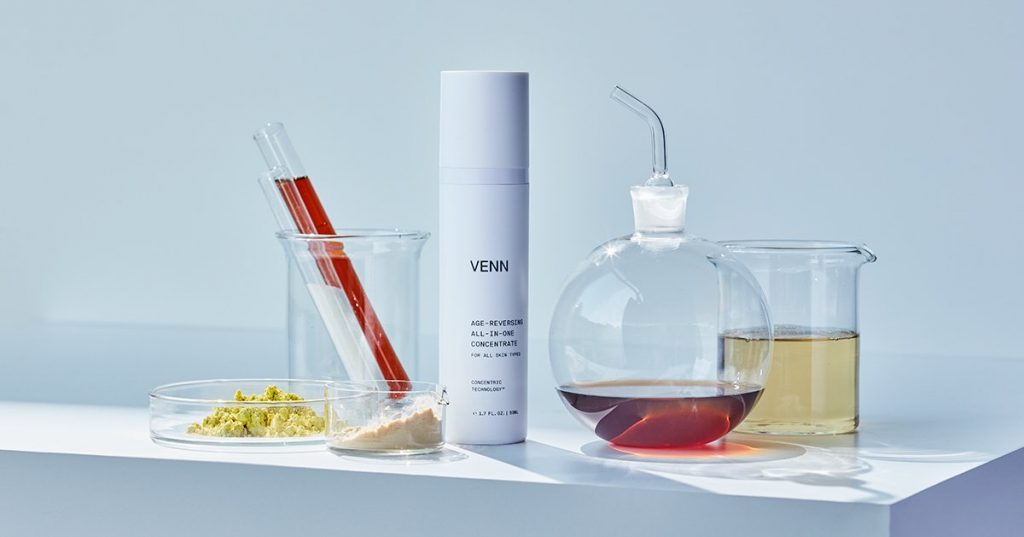
So what is Venn Skincare actually? It’s a small brand — Visit Official Website Now — that built its whole line around one idea: fewer ingredients, done properly, for people whose skin reacts to the typical cocktail of fragrance, essential oils, and “actives” that every shelf in the drugstore screams at you. Their signature product is a ceramide-based moisturizer (they call the line “Barrier” or similar naming, the point is the ceramides + niacinamide + a sensible humectant base) designed to rebuild that outer skin wall instead of adding more layers on top of it.
Why I Even Bothered Switching
Here’s my background, because context matters. I’ve had reactive, eczema-prone skin since my twenties. Not terrible eczema — I’ve never needed prednisone shots — but the kind that flares up in January, turns bright pink on the cheeks, and makes every new foundation I try turn into a patchy mess. For years my rotation was: cheap exfoliants to “clear things up,” expensive serums to “hydrate things up,” and a nightly retinoid that I could never tolerate past week two.
The problem, which I didn’t understand until a lot of trial and error: I was treating symptoms. Redness was treated with more product, which caused more redness. Dryness was treated with occlusives that my pores didn’t like, which caused more dryness-feeling. A vicious cycle of buying, patch-testing in a corner of my forearm, and starting over.
A friend in the beauty field recommended I look into barrier-focused brands and specifically mentioned Venn. I didn’t think much of it. I went to
“I’ve been a skincare person for 15 years and I’ve tried everything — retinoids, vitamin C serums, peels, you name it. What actually fixed my skin in the end was doing less. I found Venn’s barrier line and for the first time in years my face stopped feeling like it needed a full regimen just to get through the morning. My skin’s been steady since March.” — Rachel, 34, from the product’s Q&A forum I want to be upfront about the start because every “this product changed my life” post that skips the bad weeks reads like an ad, and you should be able to tell the difference. The first week, I actually felt a little worse. My cheeks were flaky in the morning and there was this tight, shiny look to my forehead by noon that I hadn’t seen in years. I thought I’d botched it — was I supposed to pair it with something else? Did I use too much? I read their application notes (again, short list, short instructions — a refreshing change from the four-step rituals other brands push). The answer was: this is a moisturizer, not a toner. Use a pea-sized amount on damp skin, once in the morning and once at night, and stop stacking products under it for a while. I did that. I paused my vitamin C, I paused my retinoid (which I hadn’t tolerated in a year anyway), and I just let the barrier cream sit alone on my face for 14 days. By day nine or ten, the tightness lifted. The flaking settled. By week two, the pinkness on my cheeks — the stuff that had made me put on concealer before going to get coffee — had faded enough that a coworker told me I “looked rested.” That’s the kind of compliment that makes you buy the next tube on purpose. This is where I’ll lay out what I’ve noticed, and I’ll separate “things I can point to” from “things that are probably just me having good weeks.” Things I can point to: Things that are probably just good weeks: “I bought one tube as a joke, you know, the kind of thing you try when you’ve given up. Ended up buying a second one the same month. I’ve stopped buying the fancy serums I used to stock up on because I realized I was masking the real problem, which was that my skin barrier was wrecked. This is the only product in my routine now that I actually reach for every single day.” — Marcus, 41, product review The “why” here is more important than the “does it work” for people who have a track record like mine. Venn’s whole pitch is that most commercial moisturizers are built for people with tolerant skin — they’re dense with fragrance to smell “expensive,” they use essential oils for “aromatherapy,” they layer on ten actives because marketing says that’s what a “luxury routine” looks like. For reactive skin, that’s a minefield. The Venn formula, by contrast, is short. The ceramides in it are the same ones your skin actually makes — they’re the mortar between the “bricks” of your skin cells. When your barrier is compromised, you’ve lost that mortar, and water leaks out and irritants leak in. Topical ceramides are one of the few ingredients with genuinely strong evidence behind them for barrier repair, which is why they’re in most dermatologist-recommended moisturizers. The difference with Venn is that they’ve kept everything else out. Niacinamide is also in the mix, which is doing double duty: it helps the skin make its own ceramides, and it calms redness and oil production. That’s why it’s a favorite for people dealing with rosacea or general reactivity. It’s not a miracle, but it’s a sensible ingredient in the right dose, and the dose here is conservative. No “10% everything” hype. Just a level that most skin can actually tolerate. Because I refuse to write a post that reads like I’m selling you something. Here’s what I’d want to know before buying: It’s not a treatment for active flare-ups. If you’re in the middle of a bad eczema episode, with weeping patches and acute inflammation, this is not the product for that. You need a dermatologist, you need a corticosteroid or a calcineurin inhibitor, and you need to figure out the trigger. Venn’s product is for the “maintenance phase” — the part of the cycle where your skin is calm but you’re still at risk of falling back into the pattern. The packaging is a bit plain. I’m going to say this and I know it’s not a real complaint: the bottle looks like a hospital sample. The brand doesn’t seem to care about making it look “luxury.” I actually appreciate this — it’s not trying to sell you a mood — but if you’re the type who wants the ritual to look and feel expensive on your nightstand, you’ll be underwhelmed. It’s a functional product, not a vanity product. It’s not cheap, and the value proposition has to be argued. Per ounce, this competes with department-store creams, not drugstore generics. I’ll be straight: I think the value is real if you’ve been spending money on products that don’t work for your skin. You’re not paying for the brand premium, you’re paying for the “we removed the stuff that was actually breaking your skin” engineering. If you have completely normal, tolerant skin, you’ll probably get the same result for less money. This product is aimed at a specific problem, and if you don’t have that problem, the math works out differently. “I’ve been using this for about five months now, after a dermatologist sent me down the barrier-repair path. The difference is that my skin used to need four products just to get through the day. Now it’s one moisturizer and I’m good. I don’t even think about it anymore. That’s the highest compliment I can give a skincare product.” — Jenna, 29, community review After three months, my routine is embarrassingly simple, and that’s the whole point. Here’s what actually happens in my morning and at night: The whole routine takes about two minutes. My skin has been calmer since I simplified it than it ever was when it was “optimized” with seven products. I think that’s the takeaway, and it’s not specific to Venn — it’s specific to the fact that I stopped doing a lot of things that were quietly breaking my barrier every single night. Based on my three months and the reviews I’ve read (there are hundreds, and they’re consistent in a way that’s rare for a product that’s not a cult classic yet), here’s who I’d say “yes, this is for you”: Who should skip it: people with completely normal, resilient skin who are just looking for “hydrating cream” and are price-sensitive. There are cheaper options, and they’ll work fine. This product earns its price in a specific scenario, and you should know that upfront. “I was skeptical because I’d been burned by ‘minimalist skincare’ marketing before. What won me over was that I could actually read the whole ingredient list in ten seconds and it made sense. I’ve been a loyal user for eight months now. The only change I’ve made is that I buy it on sale, which is the only reason I’m not at a two-year streak.” — Derek, 36, subscription customer The brand sells directly, and you can grab it from Visit Official Website Now. They run a subscription option, which I think is the smart way to buy it, for two reasons: you get a discount (I believe it’s 10-15% off, check the site for current pricing), and you don’t have to remember to reorder. I’ve been on the subscription since I bought my second tube and I have not once thought about running out, which is a kind of luxury you don’t realize you wanted until you have it. One practical note: if you’re new to the brand, buy the single tube first, not the subscription, just to make sure your skin likes the texture and the (lack of) fragrance. I’m a texture person. I want it to feel like a normal cream, not a gel, not an oil, and this is a normal cream, which is all I can say. Give it two weeks before you commit to a subscription, and if it’s doing the job, upgrade to the recurring option and stop thinking about it. Three months in, I’m not a skincare “expert,” I’m not a dermatologist, and I haven’t run any kind of clinical test. What I can tell you, from my own face, is that this is the first product in a long time that I’ve been able to keep using every single day without a single reaction, and it’s the first product that’s actually let me stop the over-treatment cycle that kept my skin in a low-grade flare for years. Is it a miracle? No. Does it claim to be one? No. Is it a well-engineered, short-list barrier repair moisturizer that does exactly what it says, for the specific skin type it’s aimed at? I think it is, and I think it’s worth the price if you’ve been spending money on products that weren’t doing the job. The “less, done properly” philosophy is the whole value proposition, and for reactive skin, I think it’s the right one. If you want to see the current lineup and pricing for yourself, here’s the direct link again: Visit Official Website Now. I’d start with the single tube, give it two full weeks on damp skin, no other products under it, and see if your face finally stops having an opinion about every new thing you put on it. That’s the moment it’s working, and that’s the moment you can finally relax and stop the four-step ritual. If you’ve used Venn Skincare, or any barrier-focused product, and you’ve had a similar “reset” experience, I’d love to hear about it in the comments. And if you have a reactive skin type you’re currently over-treating, maybe that’s your cue to stop for two weeks and just see what happens when you let the skin do its own job.
The First Two Weeks: Not Pretty
Three Months In: The Actual Results
What Makes It Work for Sensitive Skin (and Why It Matters)
The Honest-to-Goodness Cons
The Practical Stuff: How I Use It Now
Morning
Night
Who Should Actually Buy This
Where to Get It and What It Costs
My Final Verdict